
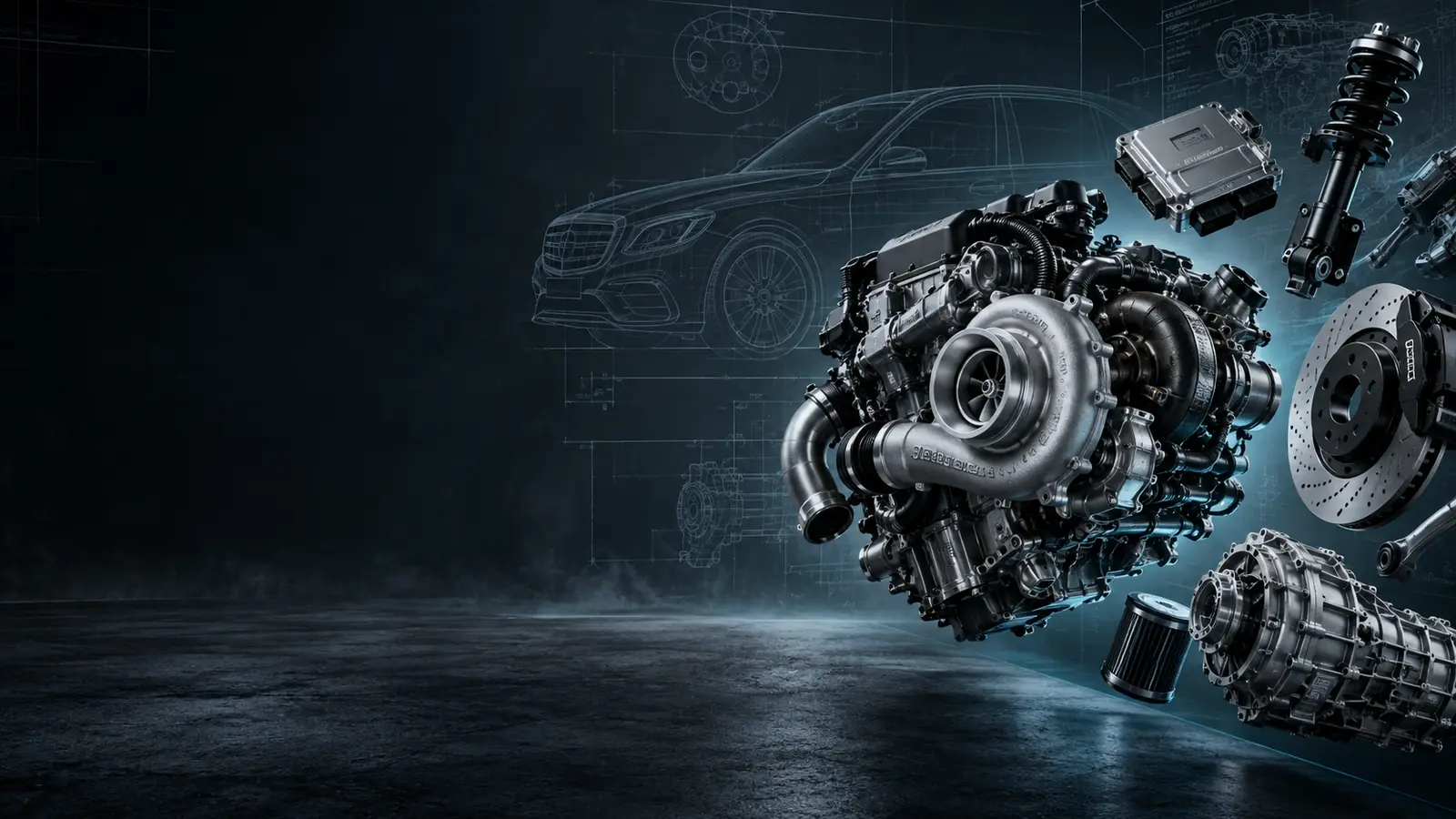
Also called turbo.
How you know it is this
- A loss of power, often with limp mode
- A whistle or siren rising with boost
- Blue smoke, especially on overrun — oil past the turbo seals
- Oil in the intercooler or the charge pipes
- A rattle from the turbo, or visible shaft play
Worth knowing before you buy
- A turbo almost never fails on its own. Oil starvation or dirty oil kills it, so the feed line, the return line and the oil condition all have to be checked or the new one goes the same way.
- Fitting a turbo without cleaning the intercooler and charge pipes of old oil means that oil gets drawn into the new one.
- Reconditioned and new are both available and the difference is large. Worth quoting both.
- Variable-geometry turbos have an actuator that fails far more often than the turbo. Have that checked before condemning the unit.
What we need to quote it. The engine code, and whether the car has one turbo or two. The chassis number settles the generation, the body and usually the engine in seventeen characters — it is on your mulkiya. A photograph of the old part helps where there is more than one version.
Rest of the forced induction
Get in touch
Turbocharger for your Mercedes-Benz?
Send the chassis number and a photograph of the old part. We come back with genuine, OEM and aftermarket options priced side by side, with lead times.
Mon–Sat, 8:00 AM – 6:00 PM · +971 54 303 3119 (Operations Director) · +971 54 241 0599 (Managing Director)