
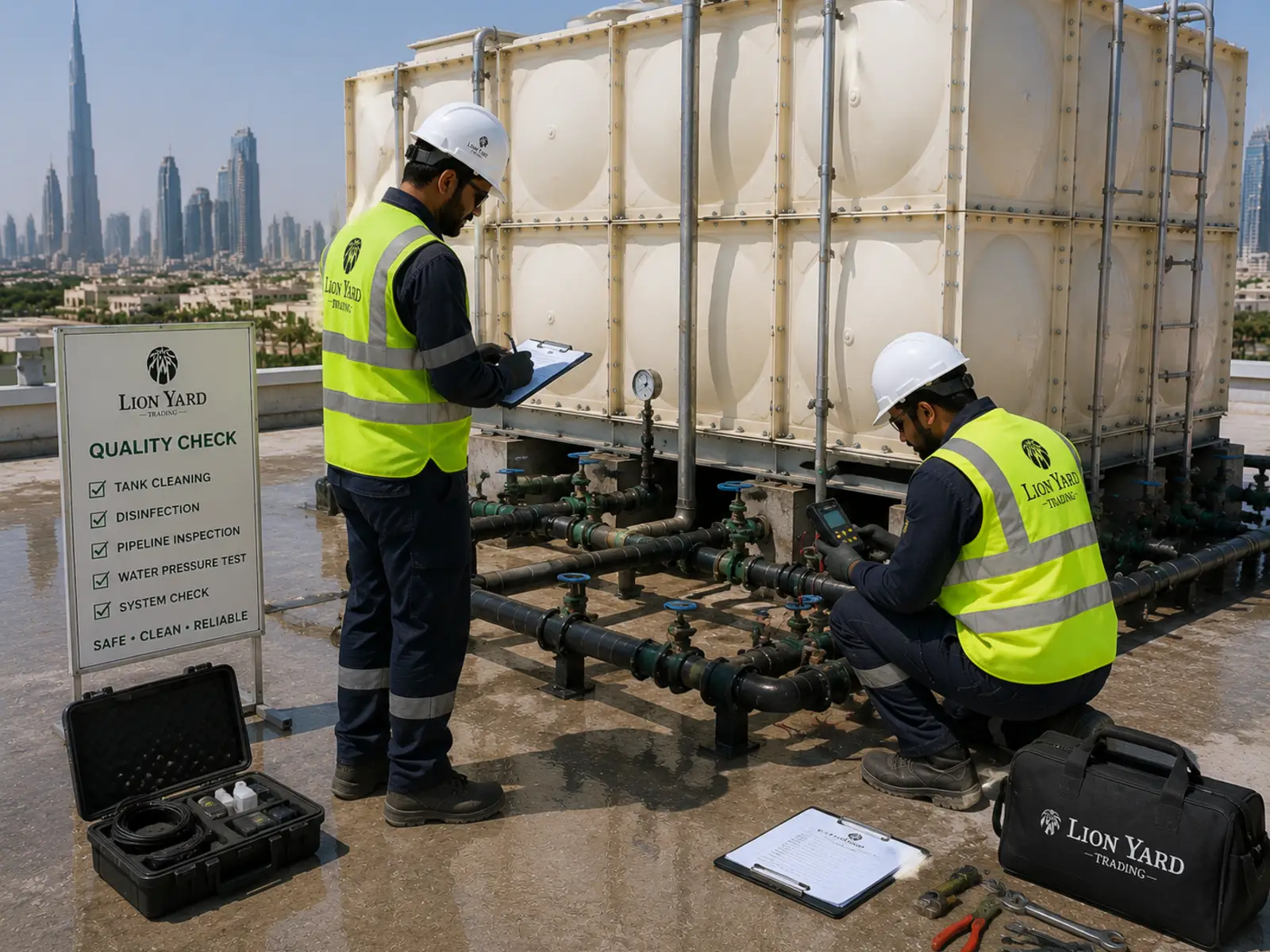
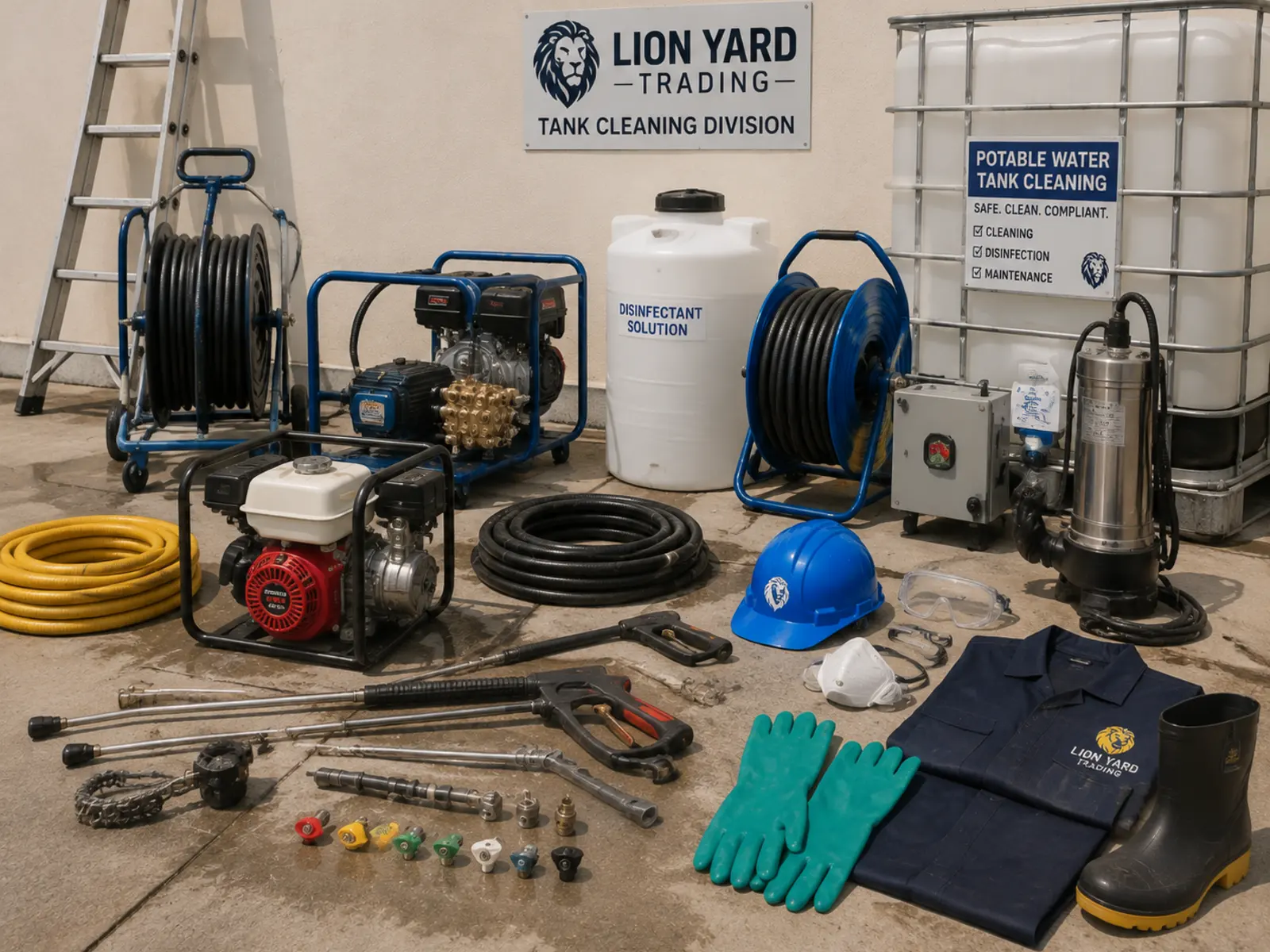
1.Drain and isolate
The tank is isolated from the supply and drained down. Sediment and standing water are removed rather than stirred back into what is left.
Each instrument is named so you can check it rather than take our word for it.
| Emirate | Instrument | Frequency |
|---|---|---|
| Dubai | DM-HSD-GU17-DW2, drinking water guidelines | Clean and disinfect at least twice a year with 50 mg/L chlorine. Internal inspection at least monthly. The cleaning company must be approved by the DM Food Safety Department. |
| Abu Dhabi | ED/R01/102, Code of Practice (2015) | Concrete and GRP underground or ground tanks bi-annually; roof tanks annually. Plastic, FRP and GI tanks annually in both positions. |
| Sharjah | Sharjah Municipality, Health Control Section | Hotels, private schools and nurseries must contract an establishment licensed in Sharjah emirate. No frequency is published — confirm with the Public Health Department. |
Fire water, diesel, labour accommodation and healthcare rules are covered in the full compliance guide, with every instrument named and linked. If you own the building, the building owners page sets out what the obligation means in practice.
The Abu Dhabi Code of Practice dates from 2015 and was issued by the Regulation & Supervision Bureau, since absorbed into the Department of Energy. Confirm the current edition before relying on it for a contract. We publish the date so you can judge it.
Tell us your emirate before you book
Contractor licensing differs by emirate and Dubai's is the strictest. Send us the emirate, the tank type and the capacity, and we will confirm what we can carry out directly and what has to go through an approved contractor. We would rather tell you that up front than after the invoice.
Four stages. The last one is the reason it is worth doing properly.
The tank is isolated from the supply and drained down. Sediment and standing water are removed rather than stirred back into what is left.
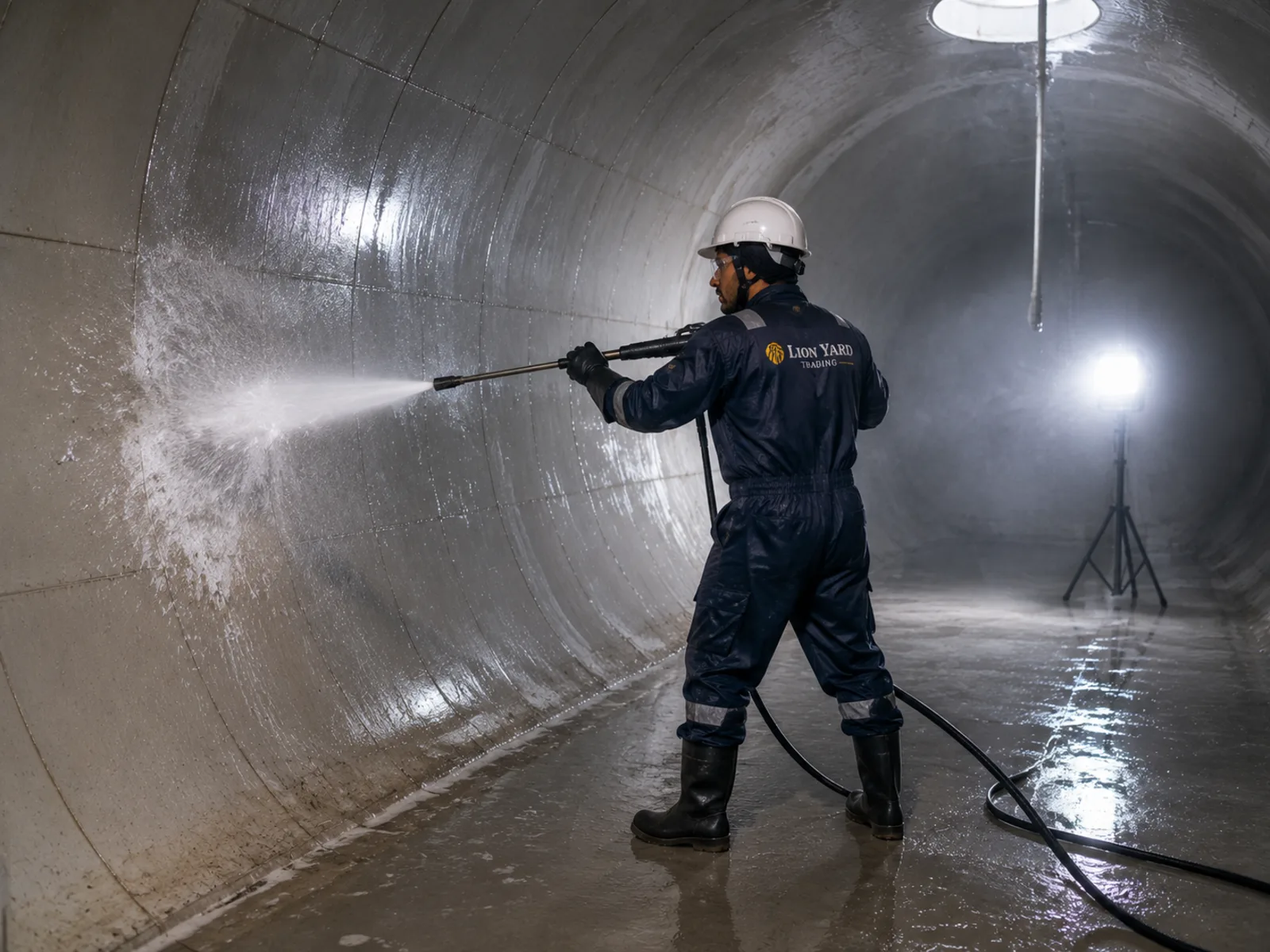
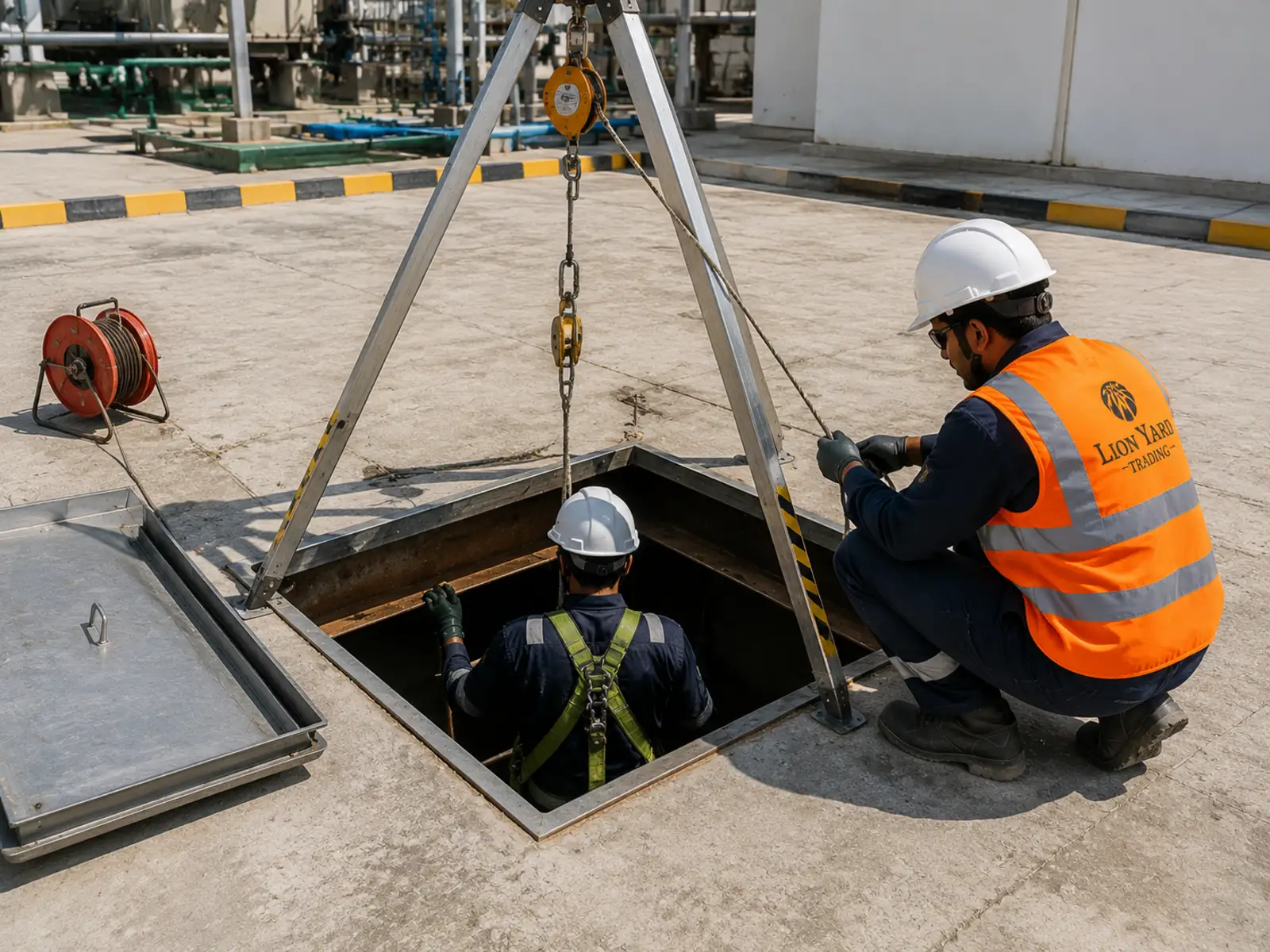
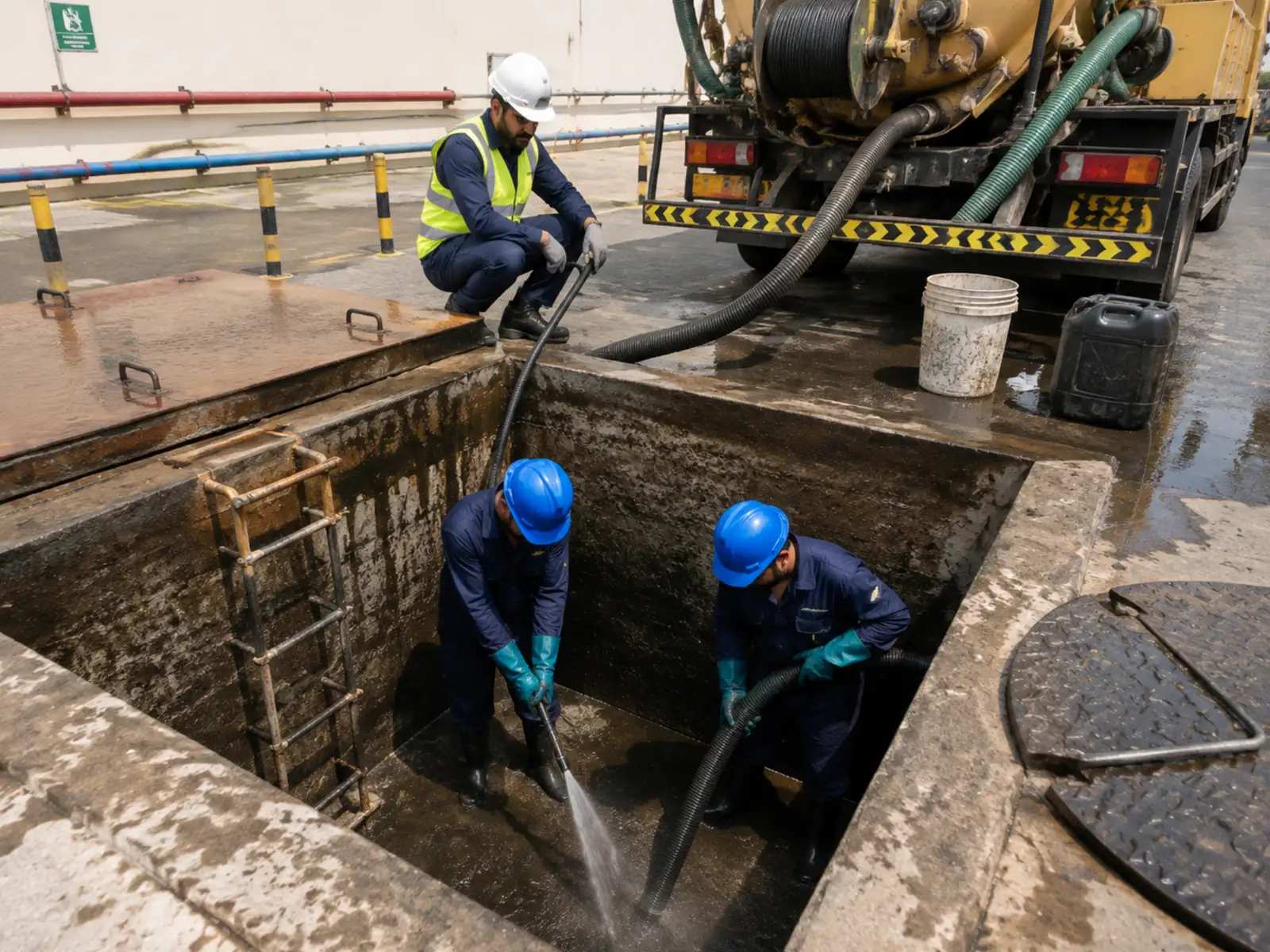
Confined-space work, done by a crew certified for it. Walls, floor and roof are scrubbed, and the sediment layer that collects in every tank is lifted out.
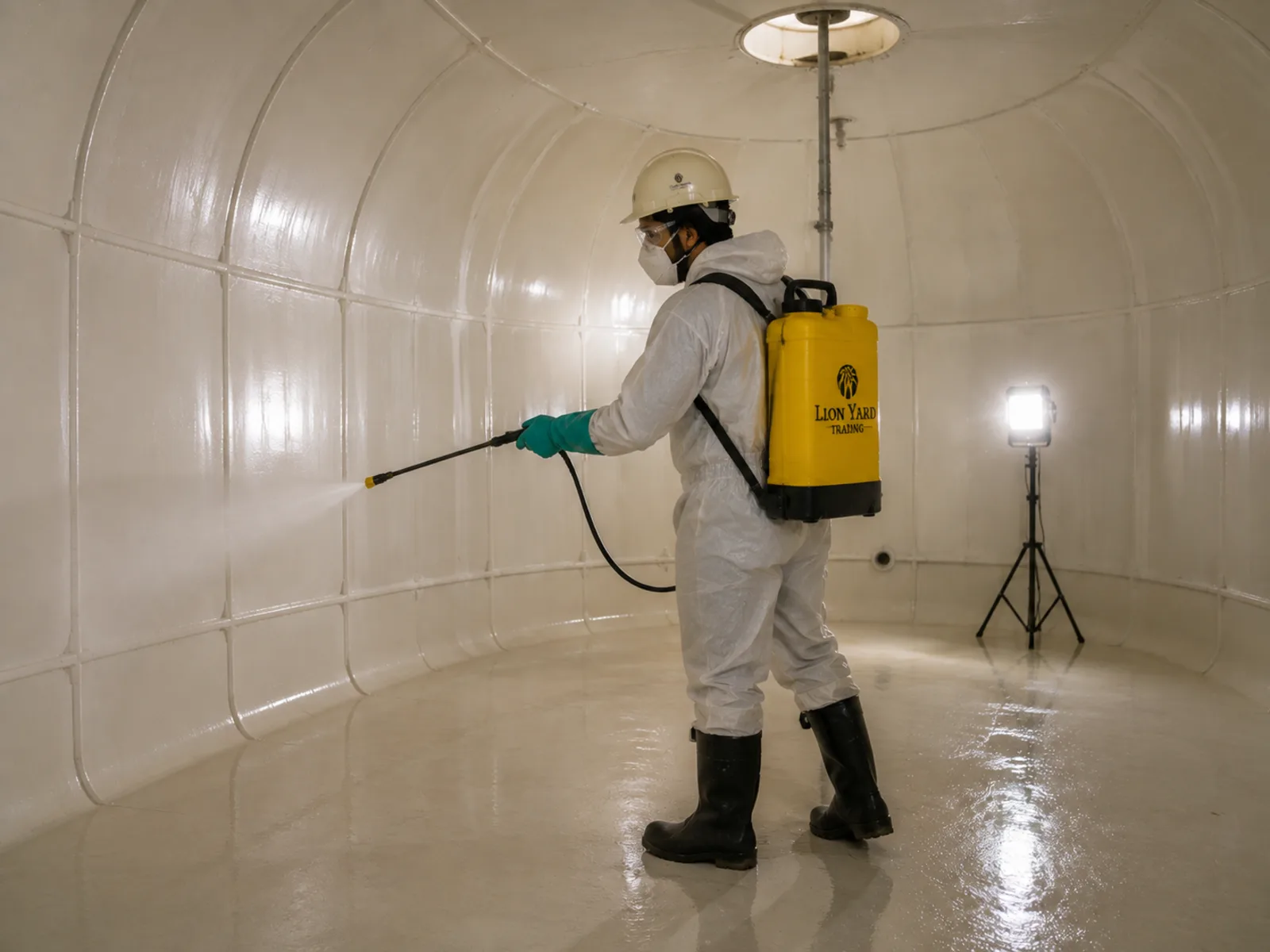
Chlorine disinfection at the concentration the municipality guideline sets, held for the contact time, then flushed until the residual is back to supply level.
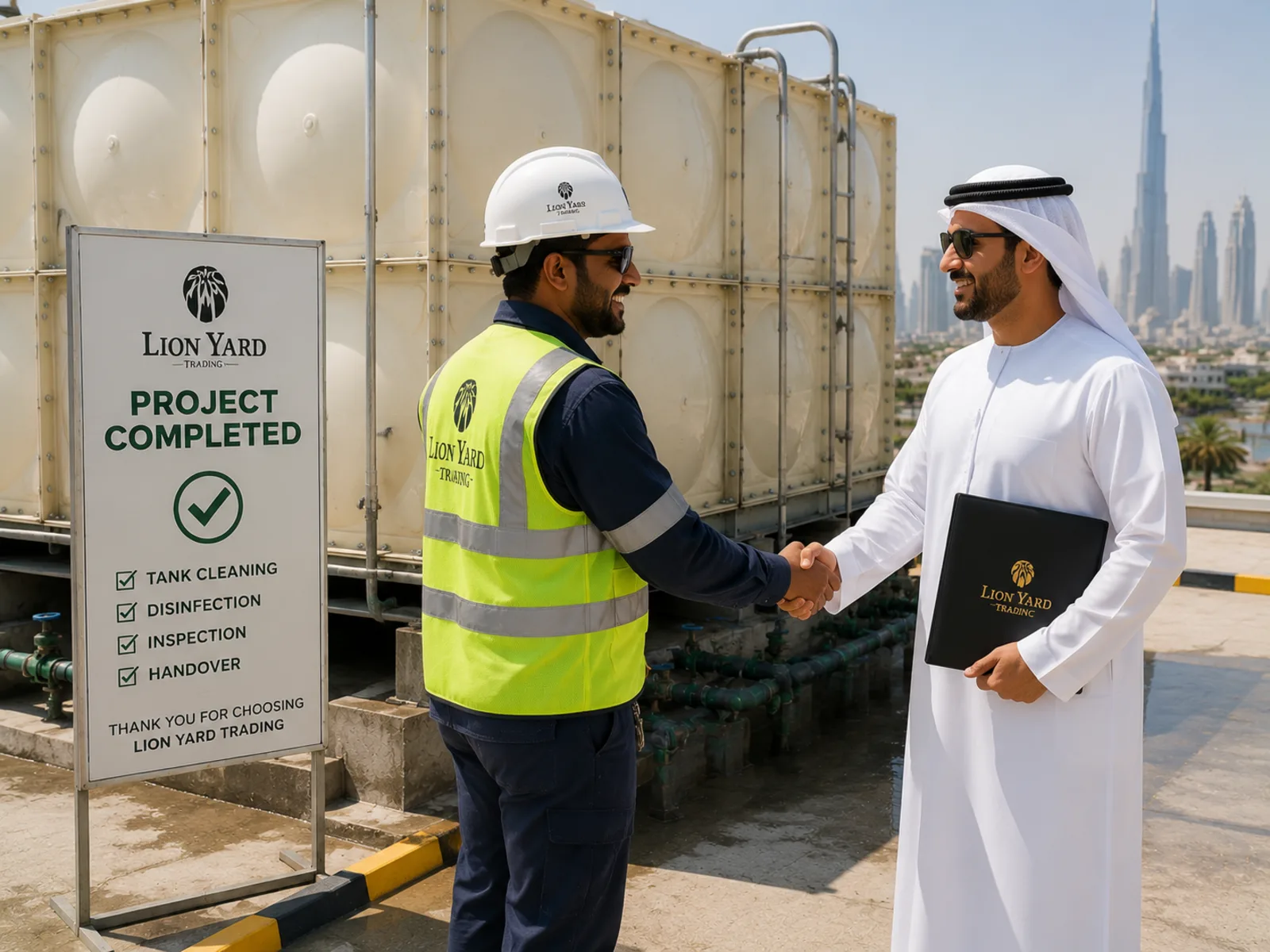
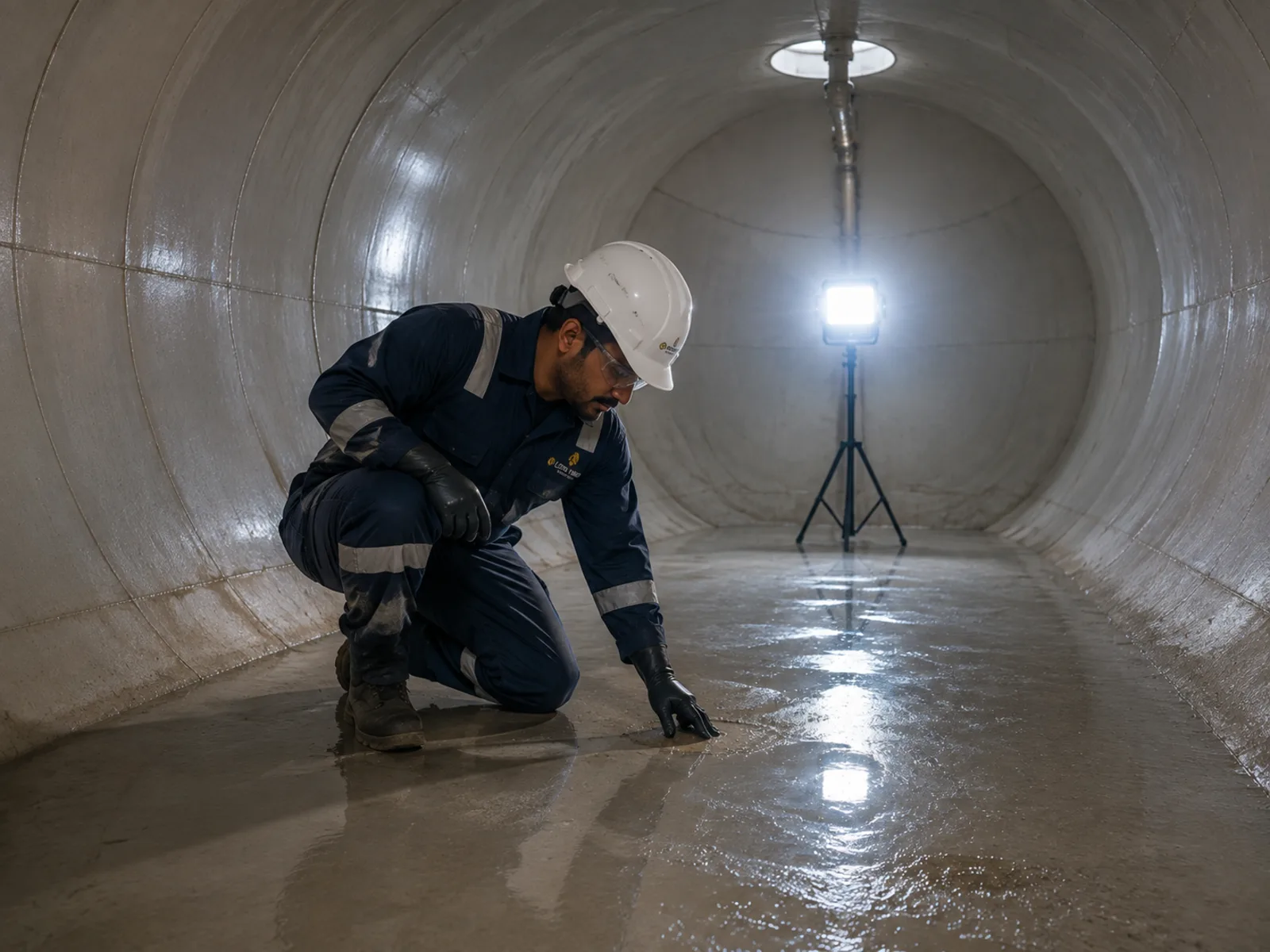
While the tank is empty it is the only time anyone can see its real condition — cracks, failing lining, corroding fittings, a lid that no longer seals. You get told what we found, not just that it was cleaned.
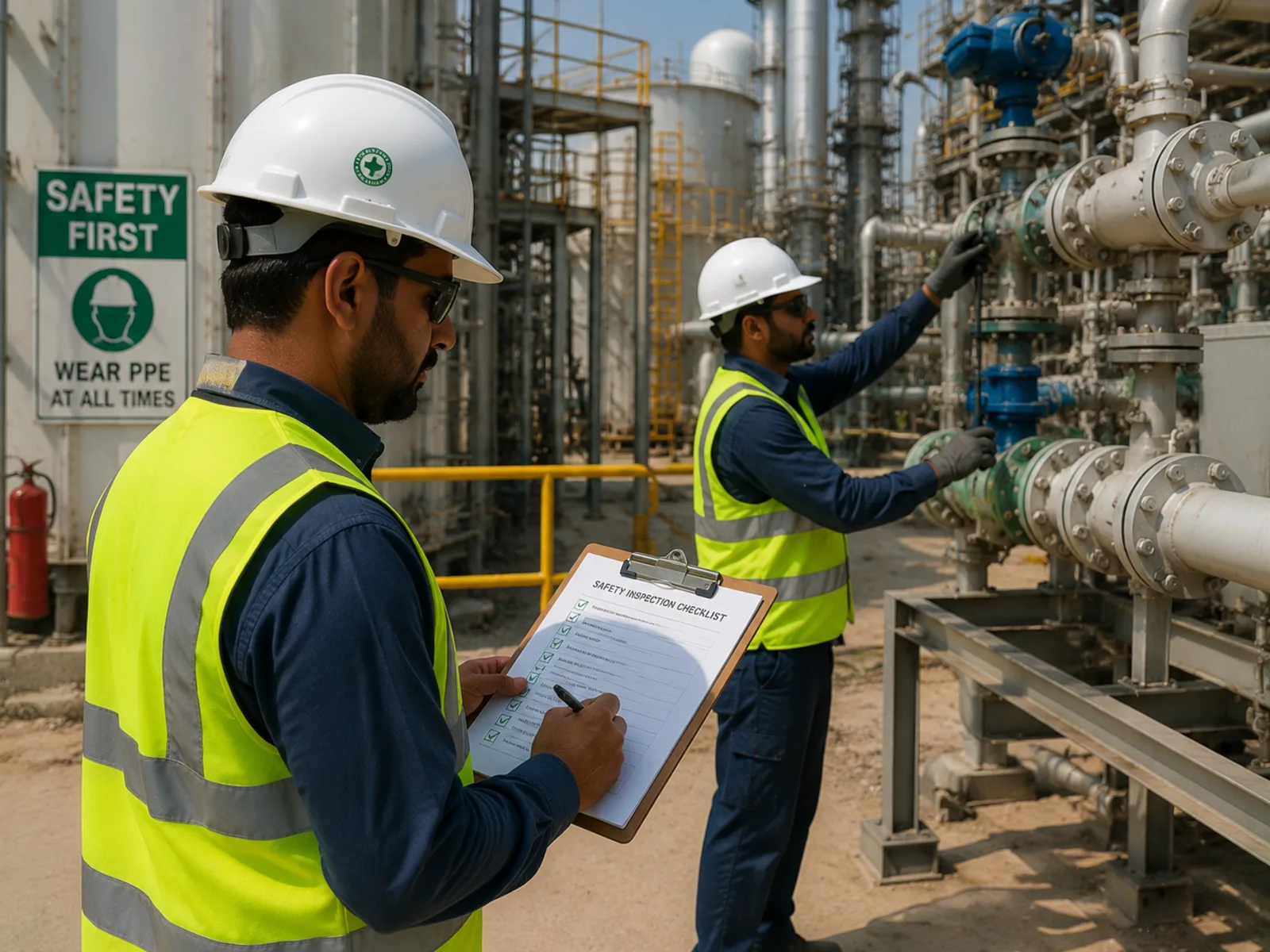
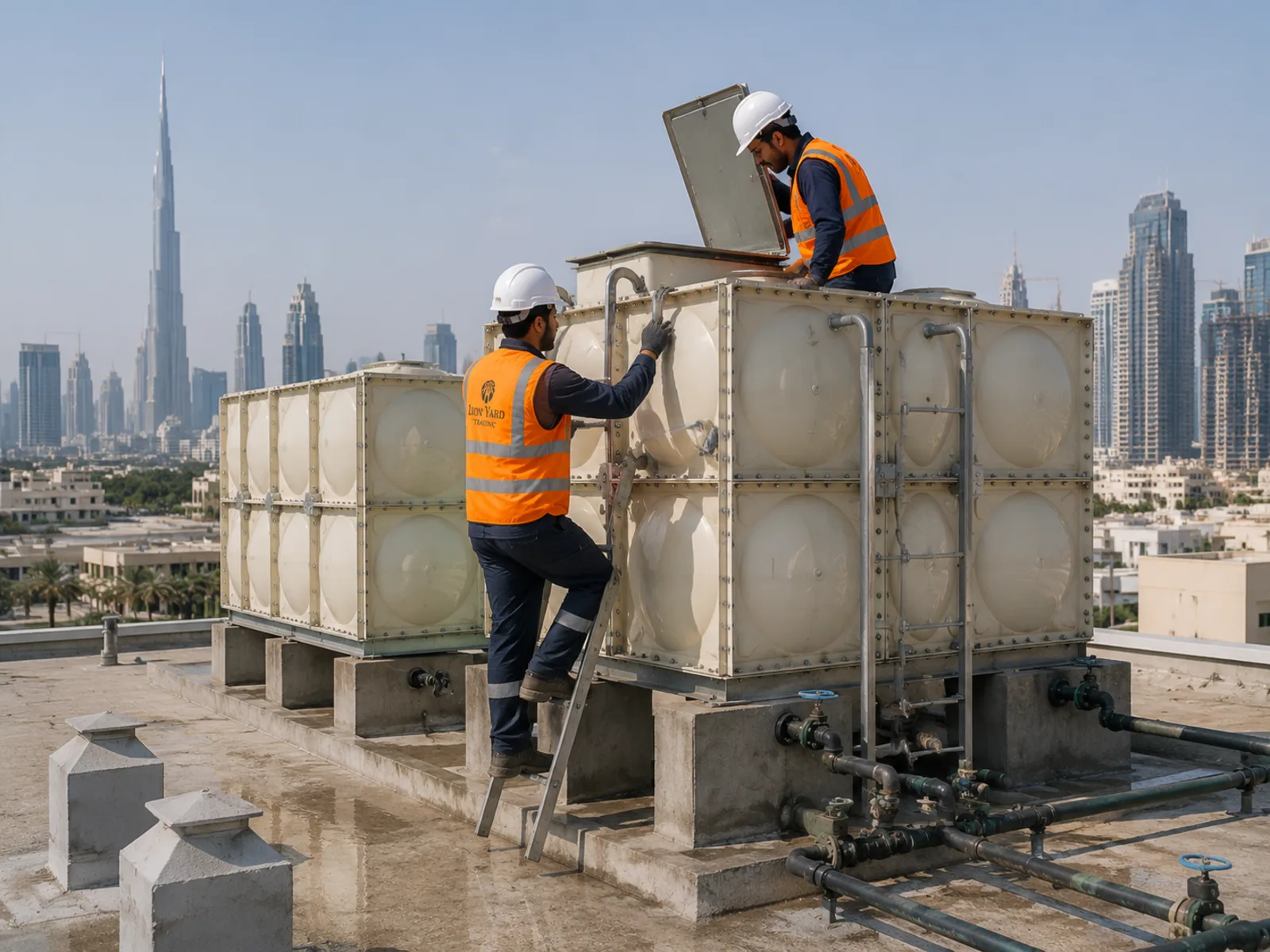
Illustrations of a typical clean — rooftop, underground and everything between.
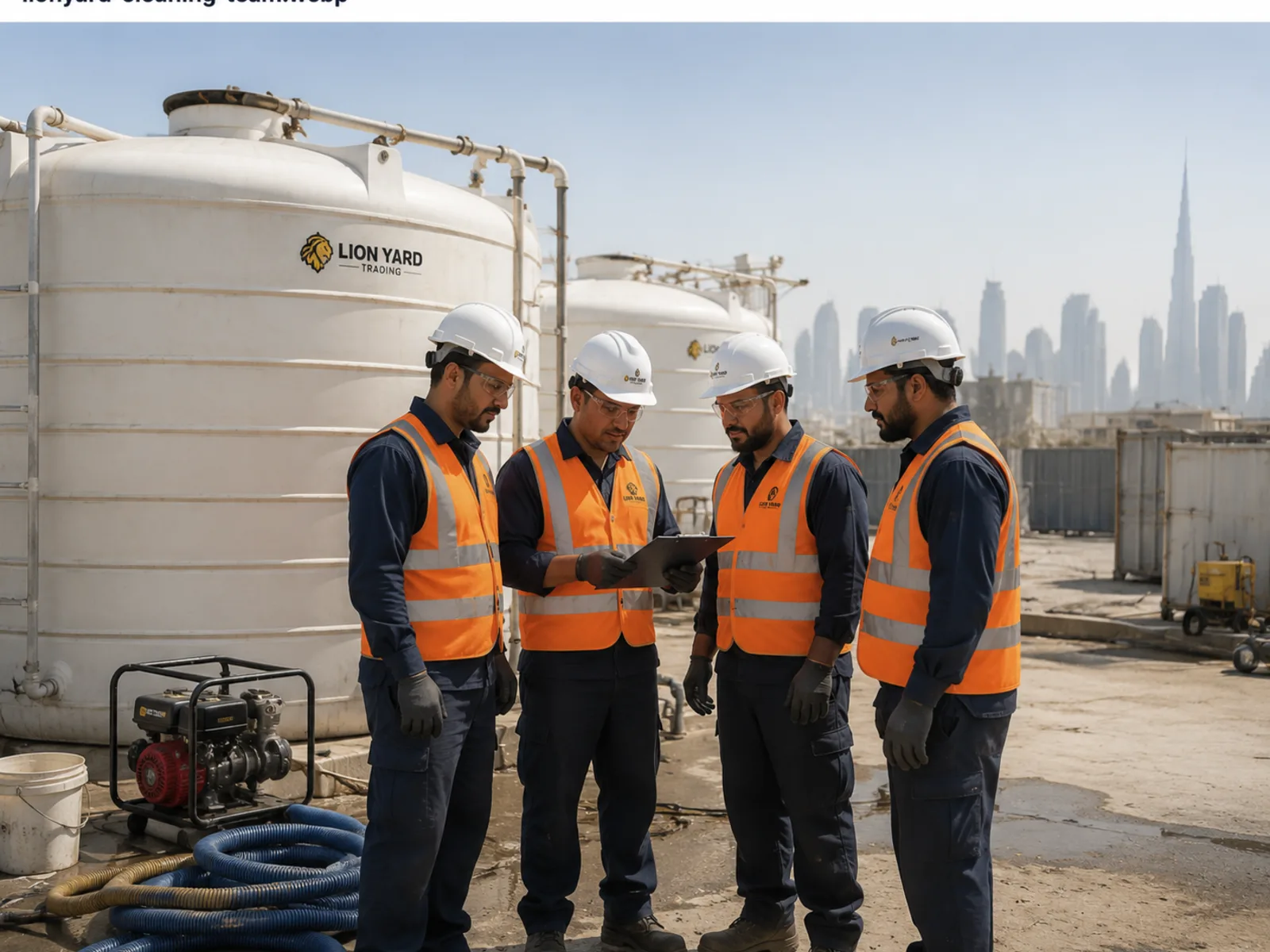
That is not a sales line — it changes what happens when the crew finds a problem.
We sell GRP, panel, plastic and steel tanks every week. A crew that only cleans sees a stain; a crew that also supplies knows whether that lining is at the end of its life or has ten years in it.
An empty, cleaned tank is the only time its condition is visible. Lining repairs, fittings and lid seals cost far less done now than as a second mobilisation later.
If the tank is finished, we will say so and quote the replacement against the same job — including taking the old one away.
It depends on the emirate. Dubai's drinking water guidelines require cleaning and disinfection at least twice a year, plus an internal inspection at least monthly. Abu Dhabi's Code of Practice sets frequency by tank type — concrete and GRP underground or ground tanks bi-annually, roof tanks annually, and plastic, FRP or GI tanks annually in both positions. Sharjah requires certain premises to hold a contract with a cleaning establishment licensed in that emirate but does not publish a frequency.
The obligation sits with the building owner or the facility operator, not with whoever supplied the tank. Most buyers find this out at an inspection rather than at purchase.
In Dubai, yes. The drinking water guidelines require the cleaning company to be approved by the Dubai Municipality Food Safety Department, with the right trade licence activity, FoodWatch registration, and cleaners registered as food handlers. Abu Dhabi's code sets contractor pre-qualification requirements including a licence, demonstrated experience and staff certification. Tell us your emirate and we will confirm exactly what applies to your job.
A domestic rooftop tank is usually a few hours including the disinfection contact time and flush. A large ground or panel tank is longer and may need to be scheduled around your water supply. The honest answer depends on capacity, access and how much sediment is in it, so we confirm it when we see the tank.
That is the sensible way to do it. An empty, cleaned tank is the only time its condition is actually visible, so lining repairs, relining, fitting replacement and lid seals are all far cheaper to do in the same visit than to come back for. We will tell you what we found and what it needs.
Yes. A contract is the practical way to meet a twice-yearly or annual obligation without having to remember it, and it keeps a documented record of each visit — which is what an inspection asks to see.